Saturday, April 27, 2013

7 Automotive Preps for SHTF

If the S hits the F, will you look like ZZ Top a month afterward? Assuming you don’t want to you won’t have to – if you stocked up on razor blades along with your other preps.prep lead
I was thinking about stuff like this the other day. The small stuff that we often take for granted – but which will be taken away from us if the S does hit the F. Stuff like being able to shave. So, I decided to add razor blades – especially the cheap disposable type, which you can buy in bulk quantities at very low cost – and also shaving cream – to my stock-up list. I now have enough to keep The Beard at bay for at least a year – maybe two, if I am careful.

Then I got to thinking about car preps. If the S does hit the F, it won’t be possible to head down to the local NAPA. Which is why it might be good to have the following stuff on hand at home:

* Extra oil filters (and oil) -
 oil prep
People know gas (and diesel) will be harder to find – maybe impossible to find – if the S hit the F. And even if you home-brew or otherwise obtain fuel, eventually, your vehicles – and generators, tractors and power equipment – will need new filters. And fresh oil. Otherwise, they’ll eventually fail – no matter how much fuel you have stocked up (or make). Having extra filters and oil on hand to do a changeout for each vehicle you own at least twice (which ought o be sufficient to ride out a 2-3 year ordeal, at least) is probably a very smart prep.  It’s also a no-risk one – because even if the S does not hit the F, you will eventually need to change the oil/filter – and oil/filters don’t go bad (as stored food sometimes does). Worst case, you’ve saved yourself some money by buying stuff now (at lower cost) than it will probably cost you a year from now.

* Batteries -battery pic
Make sure they’re up to date – and do all you can to keep them charged up, so that if the grid goes down, your batteries will still be ok for at least a couple of months’ worth of use. I rotate three trickle chargers among my fleet of vehicles and equipment so that each one is kept ready-to-go. This saves me hassle – as well as money. If you have multiple vehicles, you’ll know that batteries can get expensive. Doing whatever you can to make them last as long possible – S hitting the F or not – is just common sense.

* Tires -
The rubber that hits the road is the result of a complex – and fragile – chain of technological processes, all of which may be impaired or crippled by the S hitting the F. Tires are a petroleum-based product, for one. Imagine the effect of a major war in the Middle East on the price – and availability – of any product that is petroleum dependent. Your bug-out vehicle is only as good as its tires. Make sure they are good tires – no physical damage, plenty of tread. Ideally, new – or at least, not old. Some people keep a bug-out vehicle “just sitting” for a SHTF scenario. But if it’s been sitting for years, you might find out you’re not buggin’ out – on account of flat/dry-rotted tires. Don’t let that happen to you. A set of fresh “meats” might be worth more than a pocketful of silver coins if things go sour.
 tires pic
* Basic Maintenance -
Routine stuff – belts, hoses, brake pads (and brake fluid) spark plugs and air filters – it’s a really good idea to take care of this before you really need to take care of it.  As with engine oil/filters, buying ahead of time – so you have these items on hand, in your garage – will mean one less thing to sweat if things do get hairy. The S may not hit the F head-on. It might be a glancing blow – enough to cause horrendous economic problems (price inflation and shortages) such that the parts that are easy (and cheap) to acquire today could be not-easy to acquire (and far from cheap) tomorrow.

Related:
Fuel type – and storage – is a subject of much discussion among people trying to prepare for the possibility of a short-term (or medium-long term) economic-societal disconnect. Let’s take a look at some of the issues – and problems.

* Gasoline -storage gas pic
Most vehicles (and portable generators) run on gas, which is a highly refined as well as not very stable product – meaning, it doesn’t have a very long shelf life. It is designed to be used fairly quickly – days/weeks after having been refined. It is imperative, therefore, to treat (and store) the fuel in such a way as to maximize its shelf-life. Most people know about Sta-Bil “red” – the fuel stabilizer sold at  just about every parts place and Wal-Mart across the country. But you’ll want to buy some Sta-Bil “green” – the lesser-known marine-grade stuff. I wrote a detailed article about that here. It costs a little more, but it’s hard to put a value on having fresh fuel  – and a generator that starts when you desperately need it to. Like when you need to power the well pump that brings drinking water up from 200 feet beneath your house.

* Diesel -
It is less refined than gas – though that is changing, courtesy of government “low sulfur” fuel mandates. However, you can realistically expect diesel to last longer than gas – and if you buy red-dyed off-road diesel for just-in-case, it ought to last a very long time indeed, if stored in a sealed container and kept in a temperature controlled environment. Even then, it’s a very good idea to buy some anti-algae additive and mix that in with your fuel cache.
 cans pic
* Natural gas/propane -
The main advantage here is almost indefinite shelf-life. Suburbanites may find their gas lines have been turned off in a S hitting the F situation, but this will not affect portable storage units (such as the ones that you use with backyard gas grills) or the larger tanks for home heating use common in rural areas. It is possible to rig a car to run on either fuel – though you will need specialized parts as well as the knowledge to install them correctly. More important – in a S hitting the F situation – will be your ability to heat food (and yourself) as well as to power a generator. 
 gen pic
I did an article a few months ago about converting a standard portable gas-engined generator to operate on gasoline and CNG or propane; see here for that. Doing this conversion is fairly easy and fairly cheap – less than $200 for most kits. If you do the conversion – and store up 100 lbs. or so of fuel – you’ll have less to worry about if the S hits the F. And less to worry about if it doesn’t – because the CNG/propane isn’t going to go bad on you.

Ever.

Please share this

Friday, April 26, 2013

Lamborghini Aventador LP 720-4 50° Anniversario: Limited production model is one in one hundred

The Lamborghini Aventador LP 720-4 50° Anniversario is shocking in Giallo Maggio (May yellow) as it struts on the stage at the Shanghai Motor Show. Designed as a limited and numbered series of 100 cars worldwide, it is the current pinnacle of the bullish brand from Italy.
Fast and furious, the Aventador LP 720-4 50° Anniversario features carbon-fiber monocoque, 12-cylinder engine technology and permanent all-wheel drive. Engine output is set at 720 horsepower, that’s an additional 20 horsepower over the Aventador LP 700-4. Featuring a quick shifting ISR transmission, it is capable of accelerating from 0-100 km/h in 2.9 seconds and reaching a top speed of 350 km/h. Now that’s fast!

Aerodynamics was a key consideration when designing this super exotic sports car. Both the front and rear fascia have undergone structural and cosmetic changes. When compared to the Aventador LP 700-4, aerodynamic efficiency is improved 50%. Front air intakes and the splitter are enlarged and extended with small flaps set into the sides. A larger diffuser and new meshwork help improve engine ventilation.

The new yellow colour is a tribute to Lamborghini’s most popular colour since the introduction of the Miura, while paying homage to the founding of the Italian automaker in 1963. Matt black emphasizes the lower half of the front and rear sills- high gloss black glistens on the wheels.

Inside, all-new semi-aniline leathers is unique to the Aventador 50° Anniversario. A special tanning and colouring process provides a distinctive full grain look and smoothness to the leather. Colour options include black mixed with a shade of brown signifying the Italian region of Emilia-Romagna. Or, if you fancy something a little more stylish, the yellow colour Giallo Quercus captures the essence of the yellow oak tree in the Sant’Agata Bolognese coat of arms. Diamond patterned stitching is also unique to this one-of-a-kind car.

Please share this
Wednesday, April 24, 2013

What To Do If You Get Pulled Over By the Cops?

Few of us like to interact with cops – like scabies, they are best avoided entirely. But when do you have a choice – and when don’t you have a choice about interacting with a costumed enforcer? When are you legally required to identify yourself? To produce ID? Laws vary, state to state, but here are some general things to know:
 cop 1
* The (so-called) “consensual” interaction -
This generally applies to pedestrians and so on – people out in public, but not operating a motor vehicle.

A cop may  – like anyone else – approach you at any time and ask you questions. He is not required to have “reasonable suspicion” a crime has been committed – much less “probable cause” suggesting that a crime has been committed.

Most people – because they have been taught to defer to people wearing state-issued costumes – will answer a cop’s questions, even though they would rather not – and probably would not have, if the person asking were just an ordinary citizen as opposed to a costumed enforcer. They feel pressured. Some will show their IDs, if asked – and even grant permission to let the cop rifle through their possessions.

Arguably, all of this is less than consensual, real-world-wise, if not legally speaking. Because it can be intimidating to find yourself face to face with one of the state’s costumed (and armed) enforcers. Absent the costume (and the gun) you might be inclined to tell the person to piss off and leave you the hell alone.

However, you are not legally obliged to provide your ID, or even tell the cop your name – much less answer the cop’s questions – if the encounter is “consensual.”

Unless the cop has some legally valid reason for detaining you (more on this in a minute) you have every legal right to simply walk away. And that’s how you determine whether the encounter is, in fact, consensual. By asking him a question:  Am I free to go?

The cop will either say yes – or no. If yes, that’s it. Walk away.

If the answer is no, then you are being detained.

Very important:  Always ask the question – am I free to go? – and get an answer. Because if you don’t – and just walk away -  the cop could claim later on that you “ignored a lawful order” (or “resisted”) and might escalate the situation in a way you will not like.

You want things crystal clear and openly stated – with no room for misinterpretation. If at all possible, turn on a recording device the moment you are faced with a costumed enforcer.
 200380196-001
* Detention (Terry stop) -
This is the step preceding arrest. The cop has (or claims) a “reasonable suspicion” that some specific violation of law has occurred (or is about to occur) and has temporarily detained you for purposes of further investigation. As a practical matter, all traffic stops are Terry stops – named after a landmark Supreme Court case.

While you still do not have to answer any questions (Fifth Amendment) in several states you are legally obligated to state your name if asked and (if you are operating a motor vehicle) provide a driver’s license verifying your identity. In some situations – state laws and circumstances vary – the cop may demand that you exit your vehicle and pat you down/perform a cursory search of your vehicle.

Even so, you should always clearly state that you do not consent to any searches. This may help you in court if it is determined the stop itself was not legally justified.

Also: You are not legally obligated to carry a government ID on your person if you are not operating a motor vehicle on public roads – e.g., walking down the street.

Having stated your name – or provided your ID, if in a motor vehicle – you should once again ask: Am I free to go?

Now it is up to the cop whether to proceed to the next step – arresting you.
 cop 3
* Arrest -
Arrest means you have been  formally charged with an offense – and are being taken into custody.

Probable cause that a specific crime has been committed is the legal standard here. Usually, the cop will literally say, “you are under arrest” – and then cuff you. Once formally arrested, the cop has the legal authority to thoroughly search your person as well as any belongings and your vehicle, etc. Even so, do not give consent – unless you wish to consent to a search.

If the cop tells you he’s arresting you, ask him to specify the charge(s) and then zip it. Nothing you say to the cop at this point will result in him taking off the cuffs (much less letting you go on your way). Once formally charged and arrested, you will be taken into custody.  If the cop tries to question you further, tell him – politely – that you won’t be answering any questions.
Repeat, if need be.

If the cop won’t say “you are under arrest” – and has not handcuffed you – continue to ask: Am I free to go? Repeat this until you are either allowed to proceed on your way or taken into custody.

Please share this

Tuesday, April 23, 2013

Lamborghini celebrates 50 years with amped up Aventador Anniversario


To celebrate 50 years of madness, Lamborghini are offering a special edition Aventador that's even madder. The supercar in question is the Aventador LP720-4 50 Anniversario, and boasts more power, more winglets, and more yellow. It's set to debut this weekend at the Shanghai auto show.
The 720 in the name-tag represents 720 metric hp (or 710 in the U.S.), arriving due to a new engine calibration for its 6.5-liter V-12. 0-62 mph occurs in an estimated 2.9 seconds and top speed holds firm at 217 mph. While 19 additional horses deserve attention, perhaps the most eye-popping updates arrive on the outside. Finished in matte-black, optimized lower bodywork delivers improved aerodynamics, while intake openings, splitters, and a new rear diffuser increase in size. The upgrades, Lamborghini claim, enhance aerodynamic efficiency by 50-percent, as well as boosting high-speed cornering stability.

Festooned with yellow, the traditional Italian cabin compliments the car's eccentric exterior colorings, paying tribute to the Lamborghini Miura of the 60s. Just 100 Aventador Anniversarios will be produced (not all in yellow) with no mention yet on the premium buyers should expect to pay. A special-edition Gallardo LP560-2 50 Anniversario will also debut in Shanghai. While it promises to be just as mad as the Aventador, it's set to be considerably less yellow.

Please share this

Monday, April 22, 2013

Tips: Don't buy a lemon, do get a good deal

(Photo: Joe Raedle | Getty Images)Many considerations run through the head of someone buying a used car, and making certain that it's not a lemon is at the top of the list.

Flat 12 Gallery Owner Jeff Allen, the star of CNBC Prime's "The Car Chasers," has bought and sold used cars for decades—including in the fast-paced world of auto auctions—so he knows a few things about the process.

Here, Allen shares some tips that help make buying a used car less tricky. As a bonus, the former sales and general manager at new car dealerships discloses a secret about the best time to get the sweetest deal on a new vehicle.

Vehicle History Report

First things first. When buying a used car, ask for the vehicle history report, which usually details severe accidents, odometer problems, value and safely level. For a car that's no older than 1981, the vehicle identification number, a 17-digit serial number required on all autos, can also provide information.

"Now that the Internet is at our disposal and we have Carfax and AutoCheck and vehicle history reports—this really helps out consumers to know that they're not buying a lemon," Allen said. "And I'm not saying they're always going to know everything and they're always going to report everything. But it is a helpful tool to know where you're at."

Perform an Inspection

Go beyond the VHR to perform a detailed inspection of the car to make sure it's structurally sound. Though this step sounds basic, it's sometimes overlooked or rushed, according to Allen.

"Look for damage. Look for things that look out of place ... [such as ] sheet metal that doesn't fit quite right," he said. "The other thing is to look underneath the car. Look at the frame rails. Make sure that nothing looks like it's been altered or welded or things that don't look correct." Also check for leaking fluids or puddles.

Examine the body; inspect for dents and especially rust, which can spread and weaken the car's structure.

A buyer who isn't mechanically savvy should bring someone who is to help spot any signs of trouble.

A car isn't necessarily bad if it has minor damage or has had a fender replaced—all used cars might need a little work, Allen said. But if it has been in a severe accident, it may be too damaged to make it worth buying at any price.

The Paint Matters

One specific detail to scrutinize is a used car's paint job. Open the doors and look for overspray, as it most likely indicates that the car has been repainted since leaving the factory. Check for any colors that look like they don't match, especially in areas that are difficult to paint, such as corners and around doors.

"Paintwork has become a real big issue," Allen said. "The dealerships that take in certified cars nowadays can't have more than one panel repainted, or it's kicked out of the certification program."

Programs have different standards for how many panels can be repainted, but buyer beware. While more than one repainted panel could mean simply that the car was keyed from front to back, it could also indicate a serious accident.

Consider buying a meter that helps measure the depth of the paint to determine if it came from the factory. Or use your hands.

"The old school way of [checking a car's paint] was to feel the edges," Allen said. "And you could always feel a factory edge of a paint job. It had a smooth feel to it. And if it had been repainted, you could feel where they used the tape line."
Do Your Research

Before walking onto a used car lot, research, research, research. Use the Internet and call a few dealerships to gather information.

"Know what the value of the car is. Know what it should look like," Allen said. "Have some common knowledge going into it. It'll make you a better prepared buyer."
Please share this

Sunday, April 21, 2013

How to Find Cheap Car Parts: Junkyard 101

The North American junkyard is a magical place if you're a penny-pincher, gearhead, professional widget collector, or just bored out of your mind in need of something cheap to do. Most upstanding citizens ignore this last stop in the automotive life cycle and choose new parts from a nice, safe dealer installed at exorbitant rates. If, however, you like to add a dash of adventure to your car repair, you should definitely check out a junkyard before shelling out for new parts. For the uninitiated, these places can be intimidating, but that needn't be the case. A good automotive recycler offers a priceless mechanical education as well as a boatload of inexpensive parts.


PICK YOUR POISON


Junkyards come in two styles—you-pick and full-service. At you-picks, customers bring their own tools and personally wrestle parts from derelict cars. Full-service yards will pull requested items and deliver them to the front desk, where payment is collected, though this convenience comes with added cost. My preference is definitely the do-it-yourself type, which offers endless opportunities for mechanical exploration. Plus, their low operating costs mean these businesses are popping up all over the place lately.

When you've found a yard, call ahead to find out what they specialize in. Some yards deal primarily in domestic-brand cars, others in Japanese, German, high-performance, or vintage. Most are generalists and stock what the market both supplies and demands. If you have a rare car, ask if they have your model before spending time wandering around. They might know; they might not. The likelihood of finding that window-crank handle for your Triumph TR7 is pretty low because the supply and demand aren't there. Conversely, you'll probably find piles of pickups, vans, midsize sedans, and econoboxes. Wrecks come and go regularly, so try to find out when the new junkers come in—they have the best selection of parts. Remember, these places buy crashed and abandoned cars to recycle them, so selling their parts is a happy bonus.

WHAT TO EXPECT


The scariest part for junkyard first-timers is passing through the gates. Before stepping foot in the yard, a clerk will ask for your signature on a brief document that absolves the company of liability in case you do something stupid like drop an engine on yourself. Some places charge a nominal fee for entry as well, usually about a dollar. Consider this cheaper than paying for a movie and way more educational. In well-operated yards such as Parts Galore in Flat Rock, Mich., there is an underlying logic. The in-demand stuff is kept up front—that's where you'll find plentiful vehicles prone to frequent breakdowns or high accident rates. Conversely, examples of cars that are rare or older or don't break down much will probably be all the way in the back, with a gradual progression between. Lots are often divided by vehicle manufacturer or point of origin—domestic versus Japanese versus European, or GM versus Ford versus Toyota, and so on; think of it as the difference between Dewey Decimal and alphabetical library systems. If you're lucky, a map of the grounds is posted. Of course, your local yard may be a mess of cars with no logic whatsoever. Some owners are just lazy.

The first thing to look for is the price board. Rather than put tags on all the items on every car, modern junkyards post a list of the different parts in cars and generic prices for each. Because the board doesn't care if a radiator comes from a Ford Escort or a Mercedes C-Class, the savings against new parts can be staggering.

While prowling for parts, don't jump at the first one matching your needs. Look around for the best example and inspect it carefully, making sure it isn't damaged. Parts Galore has a database of all interchangeable components so you can find all the possible cars that could contain a replacement for your missing fuel cap or broken window-control-panel switch. Before buying an electrical component, test the part to ensure it functions. Junkyards usually have 12-volt sources, such as batteries, that you can use.

Sometimes inflicting structural damage on a vehicle is the fastest way to pull a part: Crossmembers, brackets, and wiring get chopped up all the time—just try not to destroy anything someone else might want. Be aware not everybody visiting these places works safely, so before crawling around, inspect your quarry for safe working conditions. Move on if something looks fishy. After finding what you're looking for and extracting the thing, take it up to the clerk you passed on the way in; tell her what it is, and pay. Some cheaters will call expensive items cheap ones to get a better price—that can get you banned from the grounds if you're busted.

THE FUN STUFF


Most people go to junkyards for parts; handles, cylinder heads, lights, glass, body panels, and suspension pieces are popular. There are other things to do in junkyards, though. Treasure hunters pick out expensive parts and sell them online—airbag modules and computer boxes are targets here. But there are other treats to be found. A wall of metal hubcaps or a chandelier made of hood ornaments can spruce up the garage nicely. You can find switches, speakers, air springs, and other widgets useful for DIY projects. My favorite junkyard pastime is learning. Every car is made a little different, and any engineer will tell you the best way to understand how a thing works is to take it apart. Find a car with a part you don't understand, such as a differential or transfer case, take it apart, and then try putting it back together. If it doesn't go back, that's okay. Got a big project coming up and want some practice? Junkyards are a great way to try out a repair or modification before the real deal. The junkyard is really what you make of it—whether you go for parts or mechanical voyeurism, just make sure to get your hands dirty.

EXPEDITION TOOLS


Packing tools for the yard is a bit like planning for a hiking trip: You must carry every ounce of weight you bring. With that in mind, pack the bare essentials and leave the backup in the car, just in case. Here are the must-have tools to drop into your bag for an efficient and painless hunt.

IN THE TOOL BAG

· Short pry bar
· ⅜-inch-drive ratchet set (standard and metric)
· Hammer
· Pliers
· Tin snips
· Hacksaw
· Screwdrivers
· Combination wrenches
· Allen wrenches
· Safety glasses
· Gloves
· Sunscreen

IN THE CAR

· Long pry bar
· 2 feet of pipe (breaker bar/bludgeoning stick)
· ½-inch-drive socket set
· Big hammer
· Coveralls and cardboard (for on-ground work)

Please share this
Saturday, April 20, 2013

10 sports cars under $10,000


Want cheap speed? Buy used. You won't get the latest tech or the most luxurious features, but you will satisfy that need for speed, and do it without having to sell body parts to pay off the note. The used-car values you see here were sourced from Kelly Blue Book and represent vehicles that have a condition rating of "excellent." You might have to spend a few bucks more to find a perfect example of some of these cars in your area, but they'll all be cheaper (and cooler) than most new economy cars.


2003 Ford Mustang Mach 1
Cost: $9968

If your mind is dancing with images of a classic 1969 fastback—stop. This is not that sports car. But this generation of pony did deliver brilliant acceleration back in the early 2000s (0 to 60 mph in a scant 5.3 seconds). It also offered good grip when cornering hard, but the ride and handling were anything but sophisticated. How does it compare with the GT, which you can get for a couple grand less? The Mach 1's V-8 produces about 40 more ponies, it's about a half-inch lower and is equipped with a sportier suspension; and don't forget that slick-looking shaker hood.


2000 Corvette Hardtop Coupe
Cost: $9900

Offering the speed and power of a much more expensive sports car has always been the Corvette's signature. The C5 (1997 to 2004) was no exception—so if you can't afford the sizzling new Corvette Stingray, look into one of these fixed-roof hardtops. Because it was only offered for two years (1999 and 2000), the nontarga Vette offers a small piece of exclusivity in a popular car model. While no match for the 385-hp Z06 (which became the only fixed-roof model in 2001), the regular Corvette's LS1 V-8 engine cranked out 345 hp and 350 lb-ft of torque. Besides being instantly responsive to the driver hitting the gas pedal, the engine was also capable of sprinting the car from 0 to 60 mph in under 5 seconds.


2000 BMW Z3, 2.8 Roadster
Cost: $9864

After a long hiatus, BMW got back into the roadster business when it introduced the Z3 in 1996. The affordably priced, four-cylinder roadster conjured up memories of well-heeled socialites zipping around in their early BMW 328 roadsters or 507s. A completely modern two-seater, the Z3 offered superb road manners, cast a sexy shadow, and came well-equipped from the factory. While its predecessor was a bit underpowered, the 2000 remodel was a peppier machine, thanks to a more powerful 2.8-liter engine. And though it still had an unfortunately long nose, its rump was hippier, giving the car a more aggressive, but balanced, look. Both changes were welcome, upping the car's fun factor and appeal considerably. A leather interior with power-adjustable seats was standard, as were antilock brakes, traction control, and an antiskid system.


2002 Chevy Z28 Camaro
Cost: $9554

We saw Chevy's newest attempt to revive the retro Z/28 label at the New York Auto Show as a weight-obsessed track monster. But a decade ago, when the Camaro last roamed our streets, there was no slash in the Z28. And while the old Z28 was merely the standard V-8 model, it still took its cues from when muscle cars were big, fast, gnarly looking beasts. With a Corvette-sourced 5.7-liter producing 310 hp and 340 lb-ft of torque, the Camaro offered the same brutish power with a broad, smooth power band that launched the Camaro effortlessly, whether from a standing start or for a fast highway pass. In previous-generation Camaros, cornering power came at the expense of riding comfort. Not here. It offers a more compliant ride while still offering very capable cornering. The 2002, the last model year of the fourth-generation car, represents the end of an era.


2001 Porsche Boxster
Cost: $9353

The Boxster is a purpose-built sports car, following in the footsteps of the race-bred 550 Spyder and its RS60 forefathers. Don't let its vestigial roots in the past fool you, though. This two-seater is modern in every way. The 2.7-liter flat-six boxer engine was enlarged from 2.5 liters in 2000 and produces 217 hp and 192 lb-ft, enough grunt for a 0 to 60 mph romp of less than 7 seconds and a top speed of 155 mph. The use of aluminum suspension components helps in the rigidity and unsprung weight departments, endowing the vehicle with ultra-quick reflexes that seem to only get better with speed. This is a vehicle designed to go fast and be a thrill ride for a skilled driver.


2000 Honda S2000
Cost: $9278

When tasked with building this car, Honda engineers were told to give it superior handling, crisp shifting, incredible braking ability, and killer looks. They nailed it. The key to the S2000 is its 2.0-liter four-cylinder that revved to an amazing 9000 rpm and pumped out 240 hp—a specific output that's still impressive today. Honda also mounted the engine behind the front axle, technically making the car a front-midengine and helping it turn on a dime. In the years since its introduction, Honda has yet to build a car as exciting.


2004 Mazda MazdaSpeed Miata MX-5
Cost: $8952

We can't say much about the Miata's place as a legendary driver's car that hasn't already been said. But this is the MazdaSpeed variant, so we'll give it a try. Unlike its tamer sibling, the MazdaSpeed's turbo blows 7-1/4 pounds of boost into combustion chambers with fractionally reduced compression ratios (9.5 versus 10.0:1), allowing it to develop 178 hp—36 more ponies than the stock MX-5. Based on the LS trim, the MazdaSpeed Miata is equipped with a six-speed transmission, beefier gearbox, and heavy-duty clutch. The suspension has been tweaked too; springs have been shortened and stiffened; there are bigger antiroll bars and Bilstein shocks. Other MazdaSpeed signatures include an exhaust tip, a unique front-air dam, and Racing Hart wheels. While this pint-size roadster is not screaming-fast, it'll power through the twists like a rocket. Compared with the stock Miata, it's a fire-breathing dragon.


2004 Acura RSX Type S
Cost: $8637

The Acura RSX had some big shoes to fill when it replaced the Integra back in 2001. It did so with aplomb. It was luxurious and sporty, yet affordable, and the import-tuner crowd loved it. For those who really like to push a car to its limits, this 200-hp two-door was loads of fun to toss around in traffic. There was also a particularly appealing A-Spec package that included stiffer shocks and springs that lower the car an inch and upgraded multispoke alloy wheels fitted with more aggressive rubber for better grip. The A-Spec definitely had a more stable and planted feel than the regular Type-S without sacrificing much in the way of ride quality.


2002 Subaru Impreza WRX sedan
Cost: $8051

The Subaru Impreza sedan originally rolled out in 1992 for the Asia–Pacific and European markets. The rest of the world got the WRX performance variant in 1994, the same year that the regular Impreza came out in the United States. After winning a host of international autocross and rally championships with the little pocket rocket, plus widespread fame through the Gran Turismo video game series, Subaru decided to bring the WRX model to the U.S. market in 2001. Right off the boat, it blew away the press and consumers with its impressive speed combined with a freakish ability to hold the road in the most punishing conditions.The 2002 is powered by a 227-hp 2.0-liter turbocharged flat-four, capable of accelerating the ho-hum looking vehicle to 60 mph in less than 6 seconds and on to a top speed of 145 mph. The all-wheel-drive system was forgiving, the steering sharp and precise.


1996 Nissan 300ZX Turbo
Cost: $7787

This is one of the finest sports cars to ever come out of Japan, and one of the greatest Z car ever made. It packed a 3.0-liter V-6 engine with a pair of blowers that pumped out 300 ponies and hit 60 mph in the mid-5-second range. And it handled like a dream, despite a relatively heavy weight, thanks to its innovative high-capacity active-suspension system. Like most Japanese sports cars of this era, it's hard to find one that's unmolested by aftermarket modifications. But if you can find a clean one it will offer the same virtues that made these cars popular back in the day: high performance with everyday reliability. Please share this
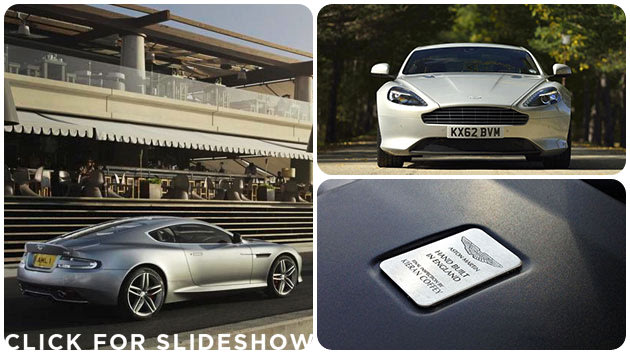
Aston Martin DB9, fine art in motion: Motoramic Drives


When shopping for a $20,000 commuter, the things you look for are simple and practical, like whether there’s enough rear headroom, of if frogurt stains will wipe off fabric seats. But how do you gauge the value of a $200,000 Aston Martin DB9, an iconic, James Bond-branded exotic? That’s enough scratch to buy a house in most parts of the United States — or a whole Detroit city block.
While luxury cars enjoy higher profit margins than a Honda Fit, the Aston oozes exquisite craftsmanship worthy of its $183,300 starting price. There are the obvious signs, like a plaque in the engine bay with name of the enviable person who inspects these cars; or hand-laid carbon-fiber accents inside and out (part of the Carbon pack). But then there are the almost imperceptible, obsessive details that you only notice when driving the car for a while, like the fuel cap seemingly chiseled out of a chunk of aluminum, or suede backing behind the door grips. The DB9 cuts no corners, and everything you can touch — from the glass-smooth paint finish to the suede headliner — exudes an artisan's dedication.

It helps that the DB9 looks stunning from every angle. The Aston literally stops traffic, and bystanders frequently whip out their iPhones to snap a picture of one in the wild. A guy in a Prius Zipcar pulled alongside of me on the freeway, staring and grinning ear to ear as though he owned the car himself.

The highlight of the DB9 is when you push the Swarovski crystal key fob — which alone costs $2,500 and looks like a miniature spaceship — into the center console and start up the majestic 6.0-liter, 510-hp V-12 engine. The sound isn’t merely great; the snarls, burbles and grunts are like a symphonic ode to V-block engines. Not high-strung like a Ferrari, or menacing like a Lambo’s V-12, it bellows with a composed yet confident roar that other supercars simply cannot match.

Nor are those euphoric sounds only for show. As the throaty exhaust note crescendos to the redline, the acceleration is decadently smooth, with a crisp, linear throttle response that makes that awesome power easy to modulate. Hitting 0-60 in 4.5 seconds, it’s not as manic as a Nissan GT-R, but you won’t care. Even when running cold, the carbon ceramic brakes have a consistent bite. The dual-clutch transmission gently tugs when driving around the street; but hit the Sport button and the gear changes become thunderously quick and precise. It highlights the dual nature of the DB9: while softer than the Aston Martin Vantage and compliant enough for long weekend drives, changing the suspension damping and throttle response to Sport transform the car into a track-ready machine.
And it’s a car comfortable being pushed hard. You’d think a hulking engine up front would easily upset the chassis, but the tail sweetly rotates with the throttle—unlike an axe-murdering Viper from the ‘90s. Even when approaching its limit, the DB9 never sheds its sense of class.

There are foibles in the Aston though, and pointing them out feels like I’m dating Adriana Lima while complaining about her sharp knees. The passenger side door had a minor hiss from the air outside leaking into the cabin. The snowplow-like front doesn’t do steep hillside driveways, and the Volvo navigation/audio interface is a throwback to 1999 (I couldn't even connect my iPhone 5 via Bluetooth or USB cable).

Nitpicking aside, there’s nothing like the DB9, which the company calls “timeless.” But in the age of ever-shrinking engine displacements, stiffer fuel economy rules, and the resulting move toward turbos, I disagree; the V-12 Aston Martin celebrates a dying form of automotive art, one destined to become priceless.

Please share this

Wednesday, April 3, 2013

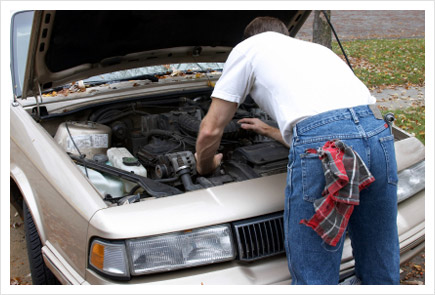
Car Maintenance You Can Still Do Yourself

Is it harder – or easier – to work on “new” cars?DIY 1
Many people have been intimidated  into submission – and don’t even check their car’s fluids anymore. This is too bad – because while it’s true new (and recent vintage) cars are more complex than cars have ever been, in some ways, they’re actually easier to work on.
The bottom line is you can still do a lot yourself – and save yourself both time and money. For instance:

* Serpentine belt -DIY 2
Many late-model cars have just a single “serpentine” belt that drives accessories like the air conditioning compressor, the power steering pump, the water pump, alternator and so on. In the not-so-good-old-days, it was common for each accessory to be driven by its own belt. Many engines had at least two and more often three belts to deal with. Not only that, but each belt had to be tensioned correctly by manually applying leverage, then tightening the bolts that held the item in place. It was actually harder to change/adjust belts in the old days than it is today. Because today, if your car has a serpentine belt, you only have one belt to change – and the tension is taken care of for you by an automatic tensioner. Typically, the job involves nothing more complicated than using a wrench or socket to apply some force to the tensioner, in order to release the tension on the belt – which can then be slipped off the pulleys. To install, just work the belt around the pulleys (follow the diagram on the sticker under the hood – most cars have these) and then, using your wrench or socket to leverage the tensioner, slip the belt over/around the tensioner pulley – and release. The correct tension will be set automatically – and you’re all done. This is a job that can still be done by an average person – with basic tools – by the side of the road, if need be. Don’t be afraid. It’s actually simpler than it used to be in the days of multiple drive belts. Serpentine belts can last a long time – 50,000 miles or more – but it’s a good idea to check annually for signs of pending problems such as cracks, which indicate the the belt material is beginning to deteriorate.

* “Air box” (filter) replacement -DIY 3
Checking (and replacing, if need be) your engine’s air filter is still more or less the same as it was 30 or 40 years ago. The difference is getting at the filter. In the past, there was (typically) a round housing with a lid held in place by a wingnut. You spun loose the wingnut, removed the round lid – and removed the also-round air filter. Easy. It still is today – only now there is (typically) a box held in place with snaps or large plastic screws – and the filter inside is flat. It can look intimidating – but it’s not. In most late-model cars, the snaps can be undone without any tools – and if there are plastic (or similar) screws, these are usually easy to turn out with a basic screwdriver. You should not need more than that in the way of tools. So, undo the snaps – or back out the screws – and pull off the top. Now you can pull out the filter. If it’s obviously dirty, it probably should be replaced. If it’s not so obvious, you can try holding it up to a bright light (or sunlight). If you can see light through the filter, it is probably still ok. If you’re in doubt, lean toward chucking and replacing. Air filters are cheap. A dirty one that strangles your engine – or lets it suck in abrasive particles – can lead to expensive problems. Typically, a filter is good for about three years/30,000 miles – though this varies depending on such things as whether you drive down dusty roads a lot (more frequent filter changes) and so on. It’s a good idea to check once a year, regardless.

* Recharge the AC -DIY 4
The AC system in your car operates by cycling refrigerant (in most new and late-model cars, the compound is R134a) through a liquid and then gaseous state, over and over. And over time, as the system ages, some of this refrigerant (at the molecular level) escapes past seals and even permeates through rubber hoses. As the refrigerant level falls below what it should be, the system doesn’t work as efficiently – it doesn’t cool as well – and may even not cool at all. Sometimes, you can recharge the system yourself – and save a bunch of money. Most auto parts stores sell DIY recharge kits, which consist of a can of refrigerant with (ideally) a gauge and a hose to connect the thing to your car’s AC lines. There is a high pressure and a low pressure side. You want the low pressure side (the kit’s instructions will explain how to pick the right one). You connect the hose to the AC low pressure line, then start the car’s engine and cycle the AC system on. Now, you’ll press the button on the can of refrigerant – it operates like an aerosol can – while watching the gauge on top, which will have a yellow (low charge), green or blue (proper charge) and red (overcharge) face with a needle pointing to – hopefully – yellow and moving to green/blue as you recharge the system. Be careful not to let the needle pass into the red (overcharged) zone or you might damage the AC system. These kits really are idiot-proof, so don’t be intimidated. If your AC system is otherwise ok and merely has a small leak issue, you may be able to restore normal operation for $20 or so  (the cost of a recharge kit) vs. $100 or more to have a shop do more or less the same thing.

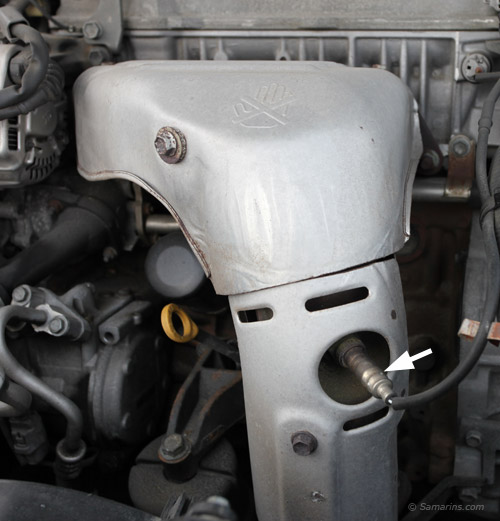
* Oxygen sensor -DIY 6
You may have noticed a plug-in looking thing with an electrical pigtail connection on your exhaust manifold(s). This is the oxygen (or O2) sensor. It sniffs the exhaust stream, relaying information back to the computer in order to maintain the ideal air-fuel ratio, which is important for gas mileage and critical for emissions control. Often, when the “check engine” light comes on, it is due to a problem with the O2 sensor. The way to know for sure is to have someone with an OBD scan tool “pull” the trouble code(s) from the car’s computer. Some parts store chains – for example, Advance Auto – will do this for you for free. If the OBD reader indicates a problem with the 02 sensor(s), you can DIY replace  this part yourself. Most just screw in. If the O2 sensor is readily accessible, you might try doing it yourself. Unplug the pigtail and – using a wrench or socket of the right size (there are special sockets designed just for 02 sensor removal) carefully remove – and replace.  Don’t forget: The trouble code will have to be cleared to get the “check engine” light to go off.  The OBD scan tool can do this.

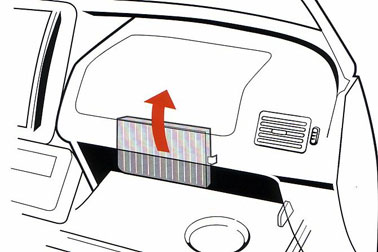
 * Replace cabin filter -DIY 7
What started out as a high-end feature found only in high-end cars is now a commonplace feature in most new cars, even economy cars. These little jewels filter out particulates, pollen and so on – which can be a great help for people with allergies. But like the engine air filter, the filters don’t last forever. As a general rule, they need to be replaced about every three years or so. This is – usually – a very simple, DIY-friendly job. Your vehicle’s owner’s manual should have detailed instructions, but typically, what’s involved is finding and removing a small access panel that’s most often located somewhere in/around the windshield/cowl area, the front passenger side footwell area or “kick panel.” Pop the old filter out, pop the new one in. You can buy a new filter at your dealer – or an auto parts store.

Please share this