“We” (as the statists always style it) waste a lot of fuel in this
country. No doubt you’ve heard that one before. But let’s examine the
cliche from a slightly different perspective: The many ways via which
the
government wastes
our fuel.
 * Out-of-synch traffic lights -
Broad avenue, three or four traffic lights – each spaced say 500
yards apart as you proceed down the road. The first goes green just as
the one up ahead turns red. Or vice-versa. Writ small, a Clover Conga.
Inch forward a bit – then stop and wait some more. It takes 15 minutes
to clear a mile or so of road that – if the lights all went green at
once – you could probably traverse in two minutes or so. Write large –
extrapolated nationwide – a massive waste of gas as millions of car
engines idle while the cars themselves go nowhere. The government itself
concedes that as much as 10 percent of the fuel used by Americans each
year is burnt up by cars idling uselessly at lights. With all the
AI-type computers and cameras everywhere, it surely can’t be much of a
technical challenge to coordinate traffic signals so they encourage
free-flowing traffic as opposed to mucking up the flow of traffic. It’s a
no-cost solution to a real problem.
Which is probably why the government is doing nothing about it. Or rather, doing
more to make it
worse.
 * Too many stop signs – not enough “proceed with caution” signs -
Other than it being “the law,” is there any sensible reason for
coming to a complete stop at an intersection where sight lines are open
and you can clearly see there are no other cars in the immediate
vicinity? Losing momentum – and having to regain it – wastes a
tremendous amount of fuel. It does not take much horsepower – and so,
not much fuel – to
keep even the biggest “gas hog” SUV moving. But it does take a great deal of fuel to
get
the thing moving in the first place. A vehicle that weighs say 3,200
pounds and which is powered by a 270 hp V-6 may only need 30 or 40 hp to
cruise in top gear at a steady 45 MPH. But it needs a whole lot more
than 30 or 40 hp to push (or pull, if FWD) that 3,200 pounds to 45 MPH
from a dead stop. The more stop-and-go, the faster the gas needle moves
from right to left. Stop
less – and save
more. Some
(Clovers) will object to the idea of people exercising discretion and
judgment – as opposed to worshipful blind obedience to signage. But then
they ought to mewl less about “wasting gas.”
Which of course, they won’t.
* Make-work “safety” zones -
It used to be that if work was being done on a stretch of road,
they’d put up cones and so on to direct traffic around the area being
worked on. Apparently, one-too-many Clovers ran down one-too-many
workers and the result is the “pilot car” safety zone. You sit and wait –
burning up fuel and time – awaiting the “pilot car” to lead the Clover
Conga through the perilous work zone. The “pilot car” is piloted by a
bored and indifferent person who always takes his time. Or rather,
yours.
Plus of course, your fuel. All because a Mr. (or Mrs.) McGoo type of
Clover didn’t see the standing army of orange cones or the sea of
blinking lights – and mowed down some unfortunate highway worker.
Instead of taking Mr. McGoo off the road, the government’s solution is
to make the rest of us wait by the side of the road for the “pilot car”
to
safely guide us through the gantlet. And naturally, the “pilot car” is invariably a large
truck – probably with a large (and hungry)
V-8 under its hood – running back and forth and back and forth all day long.
On
our nickle.
 * Lower speed limits for big trucks -
In many areas, heavy trucks are restricted to a lower speed than
other traffic (for example 55 MPH vs. 65). The one-dimensional idea
being that this will make the roads “safer” by dint of limiting the
speed of the heavy trucks. Without deconstructing
that
shibboleth (again) let’s look at another dimension – and unintended
side-effect – of this policy: Congealed traffic – and wasted fuel. Heavy
trucks rely on momentum to maintain their pace. They go faster on the
downhills in order to avoid slowing to a crawl on the uphills. But when
they are legally restricted to go slow on the downhills, it’s a
guaranteed thing they’ll go even
slower come the uphill.
Instead of maintaining 60-ish because they started out with a decent
head of steam, they gimp down to 40-ish…. with all the rest of us forced
to slow down – and burn up more fuel than we otherwise would have.
Driving an OTR truck requires a great deal more skill than putting a
Corolla’s shifter into “D” and pushing down on the gas pedal. Yet the
government restricts the freedom of action of the OTR trucker even more
than it does the Corolla driver.

That’s Uncle for you, though. He’s irascible, controlling – and violent. Rarely sensible. And
always wasteful.
Unfortunately, he’s always along for the ride, too.
Please bookmark us

+PDF.jpeg)


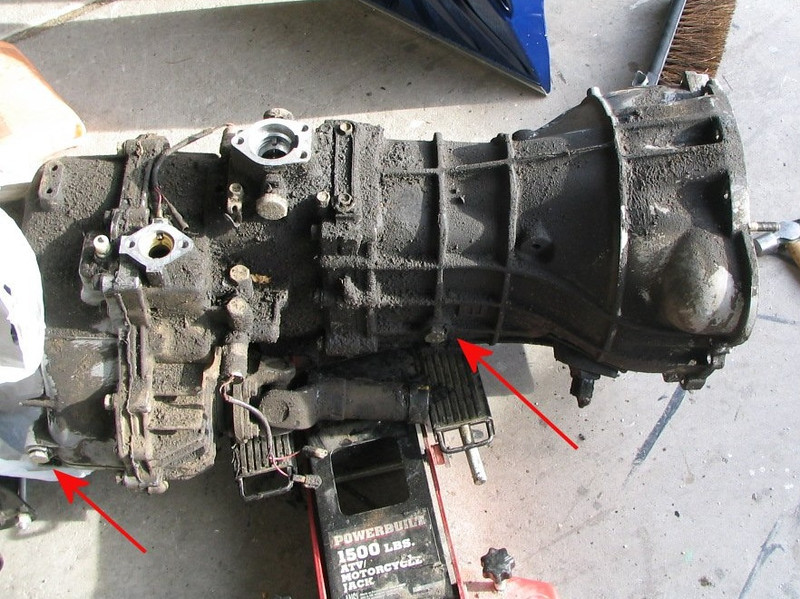 As a general rule of thumb, gear lube should be changed out every 50,000 miles or so.
 With
some late-model cars, you may be looking at $400 – or more. It’s
therefore wise to get as much life out of the one that came from the
factory as possible. And you can do that, in part, by keeping abreast of
your battery. Its condition (capacity to hold a charge) ought to be
checked at least every two years – and after about 4-5 years, it’s very
likely you’re approaching (or have already reached) replacement time –
even if there are no obvious external signs of a problem and the car
seems to be starting up normally. Ideally, replace the battery before it croaks out.
With
some late-model cars, you may be looking at $400 – or more. It’s
therefore wise to get as much life out of the one that came from the
factory as possible. And you can do that, in part, by keeping abreast of
your battery. Its condition (capacity to hold a charge) ought to be
checked at least every two years – and after about 4-5 years, it’s very
likely you’re approaching (or have already reached) replacement time –
even if there are no obvious external signs of a problem and the car
seems to be starting up normally. Ideally, replace the battery before it croaks out.
+PDF.jpeg)